Having documented cloud security policies, established compliance requirements, and defined configuration standards does not necessarily mean you consistently enforce those standards across your Microsoft Azure environment.
Without effective governance, security configurations can become inconsistent. Storage accounts may allow unnecessary public access, resources may be deployed outside approved Regions, and critical services may operate without required diagnostic logging.
For small and medium-sized businesses (SMBs), maintaining consistent security controls becomes increasingly important as cloud adoption grows.
Azure Policy is a cloud governance service that enables organizations to define, assess, and enforce standards across Azure resources
What is Azure Policy?
Azure Policy is a Microsoft Azure governance service that helps organizations define, assess, and enforce configuration requirements across cloud resources.
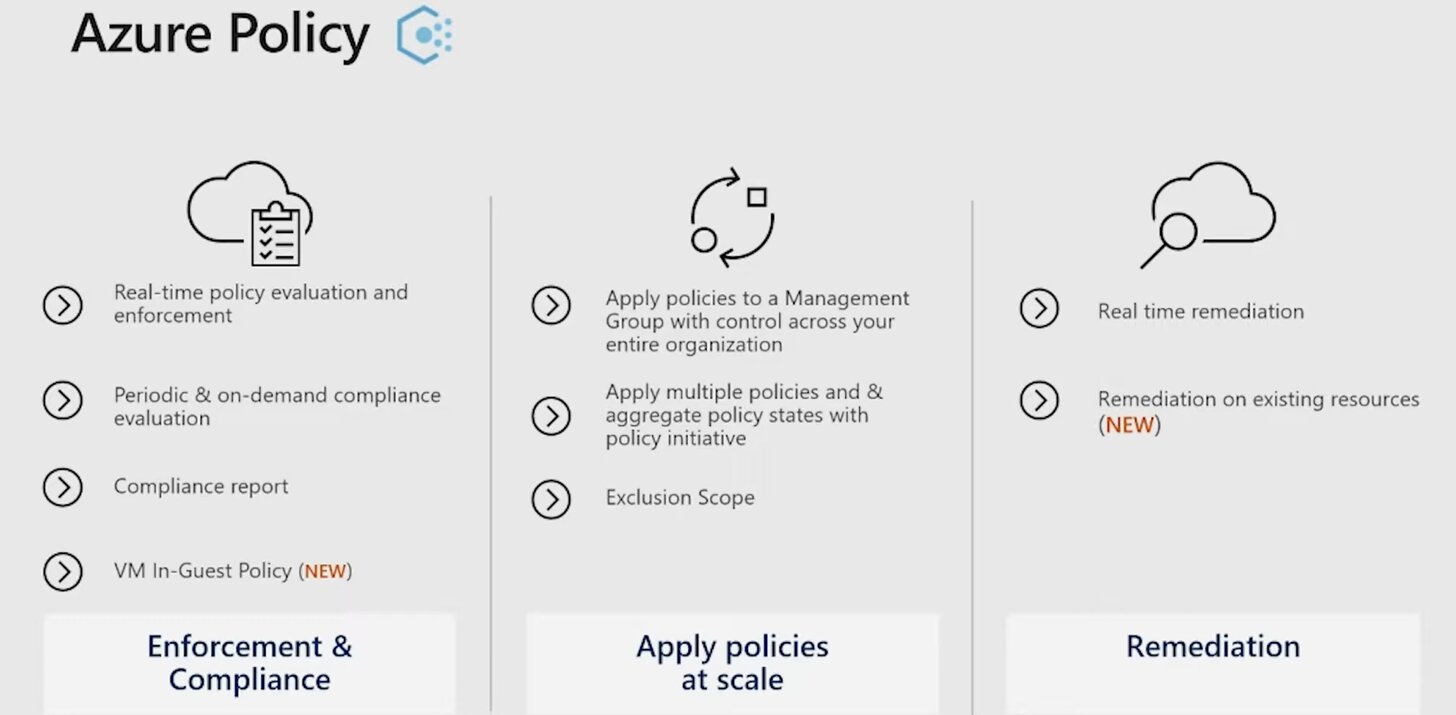
Azure Policy helps organizations enforce organizational standards, control costs, and assess compliance at scale. It evaluates your cloud resources to detect configuration drift and blocks non-compliant deployments before they happen.
Creating a policy does not automatically mean that your security standards are being enforced. The policy must be correctly assigned, use an appropriate effect, and cover the intended resources.
Here are seven areas worth reviewing.
1. Are your Azure security policies applied across the right resources?
An Azure Policy definition is a set of rules written in JavaScript Object Notation (JSON) that describes what compliance conditions must be met for Azure resources and what action (effect) should happen if those conditions are met.
A policy definition may exist without being assigned to the subscriptions or resource groups it is intended to govern. As organizations create new subscriptions and deploy additional workloads, some resources may fall outside established security controls.
What to look for
- Subscriptions without required security policy assignments.
- Unnecessary exclusions from policy assignments.
- Inconsistent policy coverage across business units.
Recommended Actions
- Inconsistent policy coverage across business units.
- Validate policy inheritance and exclusions
- Use Azure Management Groups to organize subscriptions and apply appropriate governance requirements across the organization.
2. Are your policies auditing security risks or preventing them?
Identifying cloud security misconfigurations is important, but detecting a problem does not necessarily prevent it from becoming a security incident.
According to the SANS Institute’s 2026 Cloud Security Survey, misconfigurations accounted for 45% of critical cloud security incidents reported in the survey. Furthermore, 49% of organizations required more than 24 hours to close a known critical security gap.
These findings highlight the importance of moving beyond identifying security weaknesses toward enforcing preventive controls and addressing vulnerabilities promptly.
Azure Policy helps organizations distinguish between monitoring security requirements and actively enforcing them.
What to look for
- No clear enforcement strategy for high-risk configurations.
- Policies whose effects do not match their intended purpose.
- Critical security policies configured only for auditing.
- Enforcement controls that have never been tested.
Recommended Actions
- Review policy effects and determine which requirements should be audited, denied, or remediated.
- Test operational impact before introducing stronger enforcement to avoid unexpectedly interrupting legitimate deployments.
3. Are existing non-compliant resources being remediated?
Implementing new security policies does not necessarily correct existing resource configurations. As a result, organizations may continue operating resources with known configuration weaknesses.
What to look for
- Findings without assigned remediation owners.
- Security exceptions without documented justification.
- Existing resources that remain outside the intended security baseline.
Recommended Actions
- Review Azure Policy compliance results and prioritize remediation according to business risk.
- Ensure the managed identity associated with a remediation-enabled assignment has the necessary permissions and that proposed changes have been tested
Further Reading: Remediate non-compliant resources
4. Are Azure Policy exemptions creating security blind spots?
Depending on the business requirements, organizations may need exceptions for legacy applications, temporary projects, or legitimate technical constraints. However, poorly managed exemptions can allow security weaknesses to persist indefinitely.
What to look for
- Temporary exceptions with no expiration date.
- Policy exemptions without business justification.
- No designated owner responsible for reviewing exceptions.
Recommended Actions
- Establish a formal exception management process.
- Document the reason for each exemption, responsible owner, approval, compensating controls where necessary, and an appropriate review or expiration date.
5. Are your security standards consistent across Azure subscriptions?
As organizations expand their Azure environments, different teams may adopt varying approaches to configuring and managing cloud resources.
These inconsistencies can create security gaps, increase misconfiguration risk, and make it harder to maintain effective cloud governance across the organization.
Without standardized controls, organizations may struggle to ensure that every Azure subscription meets established security and compliance requirements.
What to look for
- No centralized ownership of governance standards
- New workloads deployed without approved configuration requirements.
- Different security baselines across subscriptions.
- Duplicated or inconsistent policy definitions.
Recommended Actions
- Group related policy definitions into Azure Policy initiatives to simplify assignment and management.
- Define a baseline covering relevant resource configurations, logging, network exposure, and other security requirements.
Azure Policy and Governance tools worth reviewing
Several Microsoft Azure services can support policy implementation, governance, and security assessments.
Azure Policy
Define, assess, and enforce resource configuration standards
Azure Management Groups
Azure management groups are high-level containers that help you organize, manage, and apply governance controls across multiple Azure subscriptions at scale.
Azure Resource Graph
Azure Resource Graph is an Azure service designed to extend Azure Resource Management by providing efficient and performant resource exploration.
Azure Monitor
Azure Monitor collects, analyzes, and acts on telemetry data to maximize the availability and performance of applications and infrastructure. Collect logs and monitor relevant events and operational conditions.
Azure RBAC is an authorization system built on Azure Resource Manager that manages who has access to Azure resources, what they can do, and what scope they have.
Microsoft Defender for Cloud
Microsoft Defender for Cloud is a Cloud Native Application Protection Platform (CNAPP) that provides unified security management, threat protection, and Cloud Security Posture Management (CSPM) across hybrid and multicloud environments (including Azure, Amazon Web Services, Google Cloud Platform, and on-premises infrastructure).
Security Standards should be enforced, not just documented
At Reputiva, we believe effective cloud governance requires organizations to move beyond defining security requirements toward consistently implementing and maintaining them.
For SMBs, this becomes especially important as cloud environments expand across subscriptions, applications, and teams.
We recommend three priorities:
1. Define clear security baselines. Establish configuration requirements that reflect your organization’s risks, workloads, and business needs.
2. Enforce security requirements appropriately. Use Azure Policy to audit configurations, prevent selected violations, and remediate supported noncompliant resources.
3. Maintain continuous compliance visibility. Regularly review policy results, investigate security gaps, and manage exemptions with clear accountability.
Are your Azure Security Standards being enforced?
Your organization may have documented security standards, but are those requirements consistently applied throughout your Azure environment?
As resources and subscriptions increase, unreviewed policy assignments, unresolved violations, and outdated exemptions can create security gaps.
Reputiva helps SMBs evaluate Azure configurations, assess cloud governance, identify security weaknesses, and implement practical security controls.
Move beyond documenting cloud security standards. Make them part of how your environment operates.
Book an Azure Cloud Security Assessment with Reputiva